Arcserve states a successful backup only verifies data was copied. It does not guarantee the copy is clean or that restore testing has been completed against the target. Arcserve’s new Ransomware Protection and Recovery Suites bridge this gap, securing backup data, validating recoverability, and automating recovery while lowering operational complexity.
Arcserve Ransomware Protection and Recovery Suite – Core: Combines Arcserve UDP Premium and Arcserve Cloud Cyber Resilient Storage. AI-powered anomaly detection and encryption recognition identify mass encryption and bulk deletion within recovery points before restore decisions. Immutable cloud storage maintains offsite copies with retention locks. Automated recovery testing validates restores against recovery point and recovery time objectives.
Arcserve Ransomware Protection and Recovery Suite – Pro: Retains all Core features plus Arcserve Disaster Recovery Runbooks. The runbooks deploy on-demand temporary cloud resources and run unattended scheduled tests, uncovering configuration flaws before incidents occur. It also includes the Rapid Ransomware Response Service: an Arcserve technical incident commander takes charge of cases within 30 minutes of breach reports, 24/7/365, and performs full backup integrity audits to locate the last known clean recovery point.
Pricing: Both tiers cost less than purchasing individual included products and services separately.
Upgrades: Existing UDP users can upgrade without modifying their UDP configuration.
CrashPlan launched backup and recovery tools for Windows/Linux servers and Google Workspace, expanding its SMB portfolio to safeguard all mission-critical business data.
CrashPlan Windows and Linux Server Backup features simple deployment and administration, low maintenance and infrastructure overhead, plus scalable, cost-effective secure cloud storage.
CrashPlan Backup for Google Workspace enables SMBs to back up and restore Google Workspace data, meet compliance rules, defend against ransomware, and quickly restore employee productivity after data loss.
CrashPlan Windows and Linux Server Backup and CrashPlan Backup for Google Workspace are now generally available, each with a 14-day free trial.
Cloud file services and data management firm CTERA rolled out CTERA Forward Deployed Engineering. This new service embeds CTERA engineers into customer teams to bring AI workloads into production using enterprises’ own unstructured data. The offering helps organizations prepare governed datasets, build AI workflows aligned with existing business processes, and build internal capabilities to independently operate and extend these pipelines.
Small dedicated teams pair a Forward Deployed Engineer and Deployment Strategist, working as part of customer project groups. They gain access to customer environments and subject-matter experts familiar with internal operations. Engagements follow a phased roadmap: discovery and data grounding, initial production use case, scaling additional workflows, and final handover for self-sustained operation.
The Future of Memory and Storage Europe conference will run October 19–20, 2027 at Amsterdam’s RAI Exhibition and Convention Centre. Organizers aim to create a dedicated gathering for Europe’s memory and storage community, covering HBM, CXL, NVMe and foundational technologies powering next-gen AI, cloud and high-performance computing. The event targets over 1,500 attendees, 150+ speakers and 60+ exhibitors.
Hitachi Vantara announced Common Criteria certification for its VSP One Block storage lineup. The certification delivers independent validation of key security capabilities, backed by a guarantee of a fully clean recovery point post-cyberattack. The certification covers VSP One B20, verifying authentication, encryption and trusted communications. The broader platform combines immutable data protection with ransomware detection.
Percona unveiled Valkey-proxy, a new open source project to help enterprises adopt Valkey and migrate away from Redis. Valkey is a high-performance in-memory key-value store for caching and database workloads. Valkey-proxy sits between applications and Valkey instances, mediates communications, and presents a cluster to applications as a single standalone deployment. It also pools backend connections to keep connection counts stable during application scaling. Commercial Redis products use similar architecture, yet Valkey-proxy is fully open source, appealing to teams avoiding vendor lock-in and prioritizing data sovereignty. Code will release mid-October under the BSD-3-Clause license, followed by public testing and feedback, with general availability targeted for early 2027.
Rafay Systems provides the orchestration layer for neoclouds to partition shared GPU fleets into isolated self-service environments for each tenant, handling provisioning, quotas and metering via APIs. For instance, Sharon AI signed a five-year agreement to run up to 150,000 GPUs on Rafay’s compute-first platform. Tenant segmentation extends to storage, though Rafay functions as an orchestrator rather than a storage system. It does not replace storage layers and integrates with existing operator storage including DDN, WEKA, VAST and Dell PowerStore, automatically managing storage for each tenant. When a neocloud provisions a new customer, Rafay sets up tenant-specific GPUs, networks and storage together, maintains full storage isolation between tenants, and enforces quotas and access controls. Storage partitioning happens alongside compute provisioning instead of requiring separate manual work for storage teams.
Rafay notes operators need end-to-end tenant isolation and automation across the full stack. Storage platforms are adding multi-tenancy capabilities, but a layer is still required to link storage tenants, compute tenants, billing systems and customer self-service portals — this is Rafay’s role.
A blog post from Rubrik’s CTO describes how the firm converted unverified vulnerability scanning using Anthropic's Mythos Preview into fast, safe remediation at machine speed.
Samsung released preliminary Q3 FY2026 financial results. Samsung Electronics reported Q3 revenue of ₩195 trillion ($145.3 billion), up 127% year-over-year, with record operating profit of ₩107.4 trillion ($80 billion), a 782.5% YoY increase. The company has now posted three consecutive quarters of strong revenue growth, with full-year revenue expected to exceed ₩700 trillion ($521 billion), more than doubling year-on-year. Surging AI GPU server demand for HBM and DRAM is the primary growth driver. Full official results will be published at end of October.

High availability and disaster recovery vendor SIOS Technology appointed Charlie Mantione as Head of Sales, Americas, and promoted Marketing Director Natalia Casey to lead global marketing. Mantione brings prior sales and marketing experience from NCR, Cushman & Wakefield, Avaya, Dimension Data and AT&T.
Archive software and tape library provider Spectra Logic announced a distribution partnership with ICOS S.p.A., an Italian value-added distributor specializing in IT infrastructure and cybersecurity solutions. The deal expands Spectra Logic’s footprint in Italy and lets ICOS deliver Spectra’s data storage and management solutions to its channel partner network.
UnicornIQ announced general availability of its flagship product Vera, a Verified Intelligence Platform designed to make AI outputs factually reliable. Vera cleans enterprise unstructured data — documents, slides, chats and emails where most institutional knowledge resides — prior to AI consumption. These assets often contain stale and corrupt data; Vera extracts individual claims, cross-references them against the corporate knowledge base, and resolves conflicting or outdated information upfront. The resulting AI system delivers answers sourced from verified records with traceable references, acting as an operational backbone.
Vera targets sales teams. UnicornIQ states clean data enables sales and partner teams to close complex deals faster, with Vera acting as the high-performance tool accelerating deal completion. A Frontier Lab case study is available.
Software RAID developer Xinnor released xiRAID Classic v4.4.1, adding discard support optimized for read-heavy NVMe SSDs to sustain consistent write performance over time. The feature enables discard commands to pass from the file system through the RAID layer to compatible NVMe drives, improving flash resource management and cutting unnecessary garbage collection overhead. This update is especially relevant for high-capacity NVMe deployments within HPC file systems, virtualized environments, container platforms, databases and backup repositories.
Xsight Labs, maker of the E1 800G DPU, announced E1L, the next member of its E-Series DPU family. It is a fully programmable DPU delivering up to 200G networking at a starting 25-watt TDP, built for edge, embedded and power-constrained systems. It runs identical software to the 800G E1 model. SPDK support is native for Linux, with line-rate AES-XTS storage encryption within a power envelope suitable for storage appliances using fixed power supplies. The DPU acts as host in many E1 deployments, and Xsight anticipates this model will see even wider adoption for E1L.
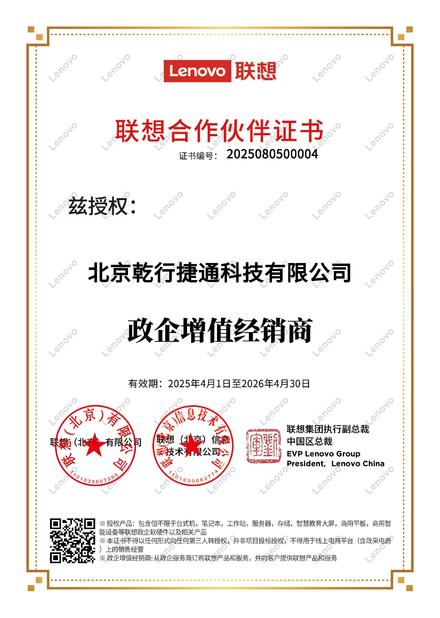
Beijing Qianxing Jietong Technology Co., Ltd.
Sandy Yang/Global Strategy Director
WhatsApp / WeChat: +86 13426366826
Email: yangyd@qianxingdata.com
Website: www.qianxingdata.com/www.storagesserver.com
Business Focus:
ICT Product Distribution/System Integration & Services/Infrastructure Solutions
With 20+ years of IT distribution experience, we partner with leading global brands to deliver reliable products and professional services.
“Using Technology to Build an Intelligent World”Your Trusted ICT Product Service Provider!


 আপনার বার্তাটি 20-3,000 টির মধ্যে হতে হবে!
 Bengali